
BioEden Animal Care
Climate first, plants second, predators never on the next tile.
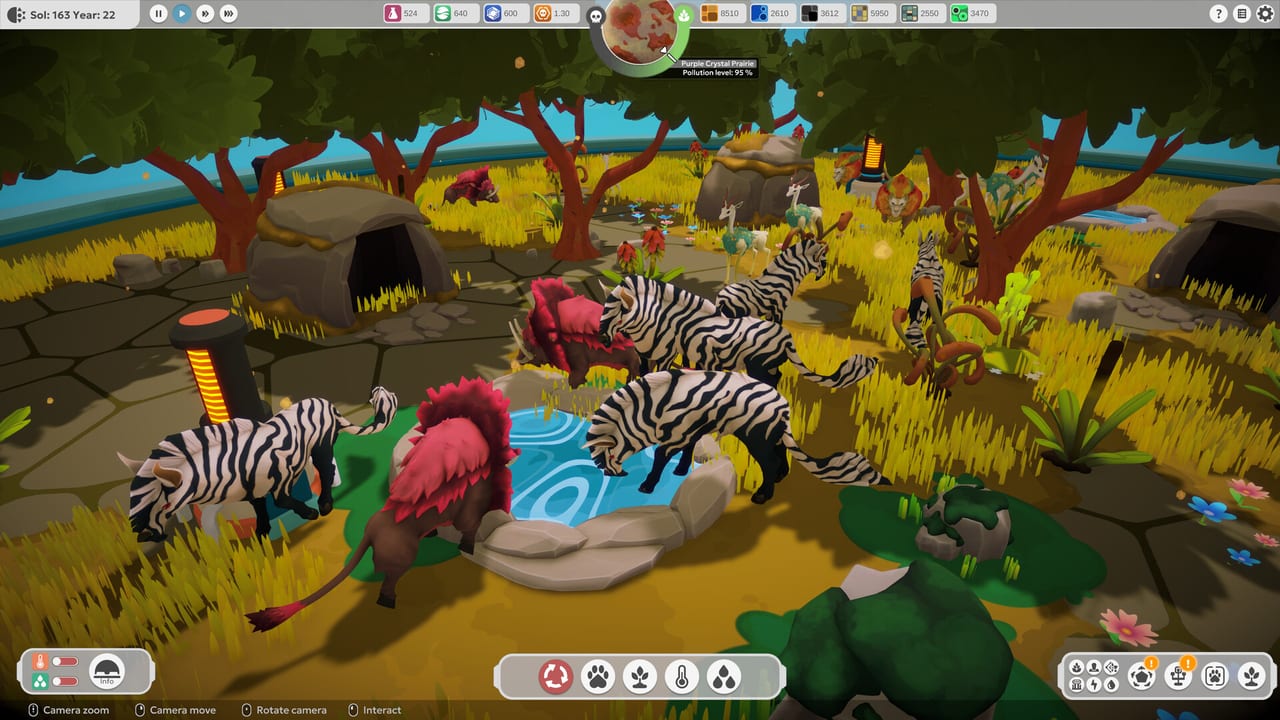
Inside a BioEden dome you are not decorating a zoo. You are matching a card. Charles calls the incubator the initial stage of a species, then splits adaptation into further stages with requirements you can read on the panel. Temperature, humidity, vegetation, food, and diet/wellbeing are the loop. Meet them and animals use the space and reproduce without extra clicks. Miss them and you spend DNA on a creature that never settles.
The playable Steam demo teaches this on Forest and Jungle tracks while the Bestiary still shows Prairie, Savannah, and Tundra tabs. Use this page as the care manual. Unlock lists and fragment math live on the DNA / Bestiary page. Rankings live on the animals tier list. First-hour placement still starts in Getting Started.
Incubator stages and the Bestiary
Place the incubator on the dome floor and follow the open steps. That is stage one. Later stages ask for residency — the creature actually wants to stay — then breeding. A perfect temperature and humidity window is an extra goal some Keepers chase for lore, not a fail condition. BioEden has no fail states. If a stage stalls, read the panel instead of stamping a second incubator.
DNA fragments unlock animals in the Bestiary. That is the UI name. Select a highlighted card and press Analyze. Forest, Jungle, Prairie, Savannah, and Tundra are separate tabs, not decorations. Jungle-side names you will see early include Landowl, Slink, Ributs, Basker, Fimble, Thudder, and Mirra, each with a DNA cost on the card. Spend fragments on one species you can actually house. A cheap card in the wrong climate is more expensive than a dear card in the right one.
The biome knowledge tree, fed by research buildings outside, unlocks plants and DNA by biome. You do not get a global zoo by grinding one hex. If the Jungle tab is thin, you need Jungle research and Jungle DNA, not more Forest ferns. The biome guide is the outside half of that rule. Hex placement of the dome matters: a Tundra species in a Savannah hex needs more climate infrastructure than the same card on native ground.
Charles will cheer when the first environment is “perfect.” That is tutorial language. Leave the dome, salvage, and come back. The Cosmic Collective still wants the planet healed; animals are how you prove the dome works, not a reason to ignore the globe. Pair care sessions with restore the planet so a 95% Prairie does not sit under a happy incubator.
Landowl, climate, plants, and diet
Landowl is the example the demo makes obvious. The card wants roughly 20–45° temperature, 55–90% humidity, and Fern. Those numbers are on the panel; BioEden does not hide them. Push temperature and humidity into the window with the climate tools, then plant Fern, then place water and food. Reverse that order and you get a pretty garden with a stressed owl.
Other cards swap the window and the plant. Some want drier air, some want a different food bowl, some want decoration density the Steam previewers summarized as “they care about decoration, temperature, and humidity.” Official store copy names temperature, humidity, and the right vegetation. Play to the card in front of you. Hover the species. If Fern is listed, plant Fern, not a generic tree.
Diet and wellbeing sit under the same honesty. Herbivores need herbivore food. Carnivores need carnivore food. If a carnivore is hungry and a herbivore is on an adjacent tile, the carnivore can eat the herbivore. That is not a bug. It is the diet system undoing an afternoon of DNA. Separate predator and prey. Do not share a bowl “because they are both animals.” Everyeye’s preview called this out as the moment BioEden stops being a cute greenhouse and starts being an ecosystem.
Reproduction is the quiet reward. Once conditions hold, animals breed without a minigame. You do not click hearts. You keep the window stable. If they look stressed, check humidity before you stamp another decorative plant. If they vanish, check adjacency and diet before you assume a pollution event ate them.
Power and water still feed the dome. A humidifier with no energy is a sculpture. A watering hole with no pipe is a puddle. Keep the outside spine small; the power and water guide is the cable version of this paragraph. Recycle unused climate machines when you leave a species. Recycle returns all resources.
Predator spacing and when to stop
Do not fill the dome. Early domes are small. Slice the floor into climate wedges if you must house two windows, but never park a carnivore on the shared edge. One well-housed Landowl is a finished tutorial. Three mixed diets in one greenhouse is how you refund DNA the hard way.
The demo’s training guild will not change these rules. Full-game guilds will. Darwin leans biology. Xylar turns dead matter into life and is marked expert. Umbra is slow and meditative. Euler is efficiency. Orin maps native resources. None of them cancel temperature windows. Compare them in the guild picker and the guild tier list after you can keep one species alive without watching the globe.
When you are ready for more tabs, leave the dome. Radar, salvage, and the knowledge tree unlock the next plant and the next card. Named sites such as Red Forest are restoration problems first and animal problems second. Charles stays a tutor; he has a short page at Charles. The demo guide covers how far the tutorial actually goes. The review is honest about how fussy this loop can feel in the first hour and how calm it is once the card is matched.
Care is restraint with a thermometer. Hatch one species, keep predators off the next tile, and go back outside before the palette talks you into a zoo.
Frequently Asked Questions
Quick answers to the most common questions.
Where do I unlock BioEden animals?
Spend DNA fragments in the Bestiary, then hatch from an incubator. Costs and tabs are listed on the DNA / Bestiary page.
What does Landowl need?
Roughly 20–45° temperature, 55–90% humidity, and Fern. Match climate before plants. More species sit on the animals tier list.
Can carnivores eat herbivores?
Yes, if they are adjacent and the carnivore is hungry. Separate predator and prey tiles. Species lists sit on the animals tier list and the DNA / Bestiary page.
Do animals reproduce automatically?
Once temperature, humidity, plants, and diet hold, they breed without extra clicks. If a stage stalls, read the incubator panel or restart from Getting Started.
Is the UI called Beasty?
No. The UI name is Bestiary. Let’s Plays misheard it. Use the DNA page and ignore the nickname.