
How to Restore the Planet in BioEden
Pollution is a footprint problem. Recycle is the skill.
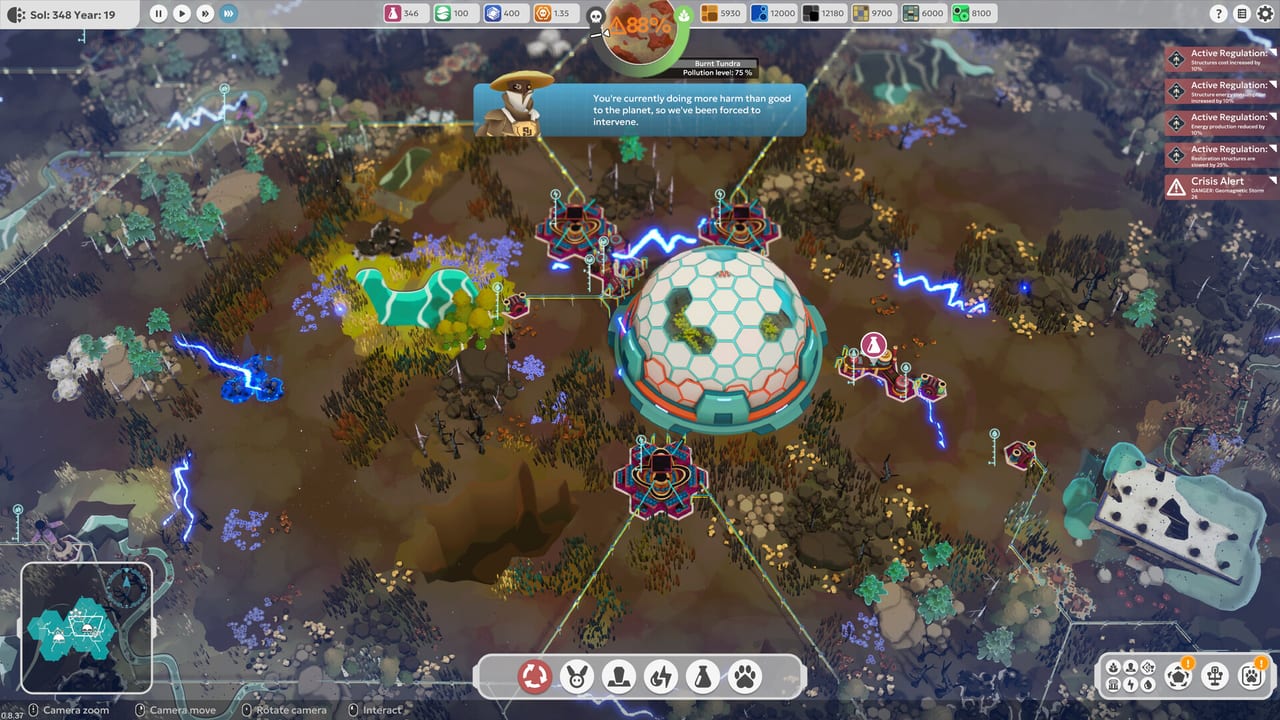
Restoring a BioEden planet is not a late unlock. It is the job you already have while Charles is still teaching the camera. Debris becomes resources, resources become a solar and water spine, and every extra building after that nudges pollution and Impact Level in the wrong direction. The Steam page says it plainly: plan with care, recycle structures once they have served their purpose, purify lakes and rivers, reclaim ruins, restore soil, and leave no trace that you were ever there.
Keepers skip that sentence. They stamp miners because the tutorial said miners clean surrounding land. They stamp radar because fog is annoying. They stamp an Orb Factory because a Collective Request asked for orbs. The globe widget then shows a Prairie at 95% and a Jungle that was healthy an hour ago. This walkthrough is how you recover that planet without pretending BioEden will fail you out. It will not. There are no fail states. Recycling returns all resources. You can take as long as you need.
If you are still in the playable Steam demo, pair this page with the demo guide. If you have not built the first spine, use Getting Started first.
Pollution versus Impact Level
They sit together on the globe and they are not the same number. Pollution is the sick percentage on a named site — Jungle at 8%, Red Forest at 65%, a crowded Prairie at 95% in sessions that overbuilt. Impact Level is the pressure of your structures: extractors, pylons, radar, factories, even helpful purifiers. Charles warns that if impact climbs too high, cataclysms can occur. In the demo that is usually weather, not a game over: a sandstorm that pauses work, dust that makes extractors worse. Steam reviewers have sat at 60% disaster threat and watched a brief storm. Unpleasant. Survivable. Still a signal to stop expanding.
Collective Requests are a to-do list from the Cosmic Collective, not a timer. They will ask for factories, impact cuts, or purification. Active Regulations sit beside them. Regulations are the rules currently in force: extra impact from certain buildings, a bonus for restoration, a penalty for industrial sprawl. Read both before you open the palette. A request that wants four Orb Factories while a regulation is punishing extra footprint is a request you delay.
Purify water on purpose. Toxic lakes are not scenery. A water distributor next to a dirty source still feeds the dome, but the hex stays wounded. Place purification where the globe is loudest, then recycle the extra extractors that got you the scrap to build it. Restore soil on the same hex instead of ringing a second dome. Radar can wait until the fog actually blocks a request.
The power and water guide is the network half of this advice. Shortest cables, no idle draw, Orb Factory tooltip treated as a warning. The buildings tier list is the ranking half: which structures earn their footprint and which are vanity.
Recycle everything unused
Recycle is not a cleanup you hit at the credits. It is the core skill Broken Arms Games described to previewers in Paris. Everyeye’s writer built three balanced domes, stacked solar, ran extractors, and still watched the planet look dead. A developer stepped in: build only what the next step requires, dismantle what you do not use, power down what you might want later. Dismantling returns all resources and cuts the ecological footprint. That is official design, not a trick.
Walk the hex ring and ask one question per building: is this serving the current request or the current species? If no, recycle it. Spare solar when demand is already met. Extra miners after the debris is gone. A second radar. An Orb Factory that finished its quota. Decorative cable runs. Each one was a pollution vote you can take back.
Power down is the middle option. If a humidifier must return when you hatch the next Jungle card, shut it off instead of recycling. Idle buildings can still weigh on impact; the tooltip will tell you. When in doubt, recycle. You can rebuild in thirty seconds with the same scrap.
Do not plant a second dome to “spread” pollution. Domes are hex placements with their own climate tools. Cloning a Forest climate onto a Prairie hex just spends more energy. The biome guide explains why each tab wants its own site.
How to recover a 95% pollution Prairie
Stop placing. Open the globe. Note Impact Level, Active Regulations, and whatever Collective Request is blinking. Ignore the request if it wants more industry.
Recycle idle extractors first. They kick dust and they have already done their salvage. Recycle extra solar and spare cables. Recycle the Orb Factory if it is sitting dark with orbs in storage. Recycle radar you placed because the fog felt rude. Watch the Prairie percentage after each pass. It will not slam to zero in one click, but it will move.
Purify the lake that feeds that hex. Restore the soil tiles the tutorial pointed at. If a building is still required for water or a dome, keep the shortest path and delete the scenic route. Power down climate tools inside a dome that is not currently hatching.
Then wait. BioEden is a 15–20 hour game scheduled for 3 September 2026, and the demo is only the tutorial, but both reward a pause. Animals still need temperature, humidity, and plants; do not starve a Landowl while you panic-recycle humidifiers it still uses. Check animal care if wellbeing dropped while you cleaned outside.
When the Prairie is no longer a skull, complete the restoration-shaped request, not the factory-shaped one. Reclaim a ruin if the hex offers it. Leave. The Steam copy’s fantasy is that you become a force of renewal and then disappear. Play toward that, not toward a skyline.
If the HUD is why you missed the widget, read controls. If you want a verdict before pre-order, the review is honest about this same trap. Guilds in the full game change how hard sprawl is punished — Umbra is slower and greener, Euler is efficient, Xylar is expert at turning dead matter into life — but none of them cancel recycle. Compare them in the guild picker after the globe looks less angry.
Frequently Asked Questions
Quick answers to the most common questions.
Can I fail a BioEden planet?
No. There are no fail states. Recycling returns all resources. High pollution is a footprint problem, not a game over. Start with the demo guide if you hit this in the tutorial.
What is the difference between pollution and Impact Level?
Pollution is the sick percentage on a named site. Impact Level is the pressure of your buildings and can trigger weather setbacks. Both fall when you recycle. See power and water for idle drain.
How do I fix a 95% Prairie?
Stop building, recycle unused extractors and factories, purify the lake, restore soil, and delay factory-shaped Collective Requests. The biome guide helps you avoid cloning a second climate.
Should I always complete Collective Requests?
No. They are a to-do list, not a timer. Read Active Regulations first. If a request wants Orb Factories while the globe is red, recycle and come back later from Getting Started.
Do guilds change restoration?
In the full game, yes — Umbra is meditative, Euler is efficient, Xylar is expert. The demo uses a training path. Compare them in the guild picker.