
BioEden Power and Water
A short spine beats a pretty grid. Hover the Orb Factory.
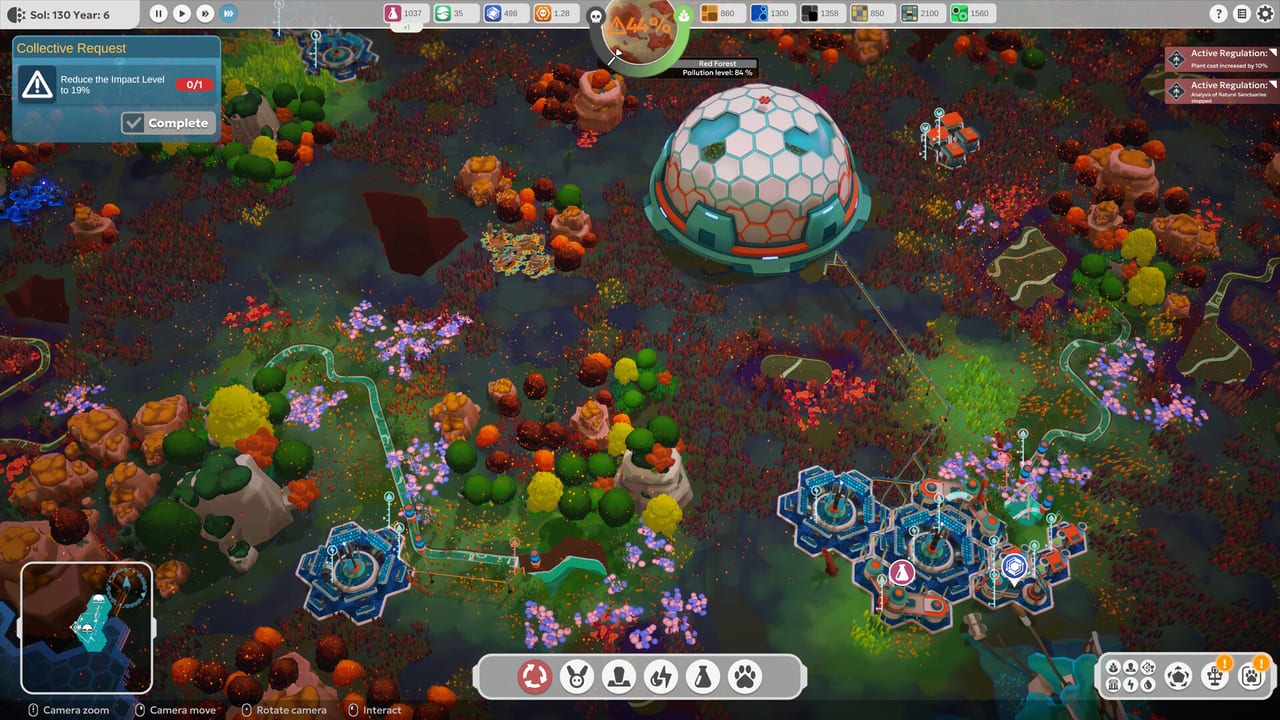
Every BioEden building that matters hangs off two networks: solar electricity and distributed water. Debris becomes the scrap. Scrap becomes a generator and a distributor. Cables and pipes weave those two into a spine. The Steam page calls this the base of your network and then warns you in the next paragraph: each addition consumes resources, draws energy, and nudges pollution upward. The skill is not maxing supply. The skill is matching demand, then stopping.
Charles teaches the first placements in the playable Steam demo. If you have not done that yet, use Getting Started. This page is the network rules after the tutorial voice stops shouting. Pair it with restore the planet whenever the globe is louder than the resource bar, and with the buildings tier list when you need to know which structures earn their draw.
Solar, water, supply, and demand
Place one solar source with a clear shot at the sky and one water source next to a lake or river you can actually purify. Connect them with the shortest cables and pipes that reach the buildings you intend to run this hour. Hover a ghost before you confirm. The preview lists energy draw and, for thirsty structures, water demand. If supply is already green, do not stamp a second pylon because the palette is unlocked.
Water is not scenery. A distributor beside a toxic lake still feeds a dome, but the hex stays wounded. Purify the source. Pipes that loop for looks are still footprint. Cut them. Radar, extractors, research buildings, humidifiers, and incubators all sip from the same spine. The outside hex grid and the inside climate tools share a budget even though they look like two games.
Demand changes when you power something down. Power down is the switch for a building you will need in ten minutes. Recycle is the switch for a building you should not have placed. Recycle returns all resources and cuts pollution and Impact Level. Idle draw is how Keepers grow a 95% Prairie while the resource bar looks rich. Walk the hex ring. If a generator is feeding nothing, recycle the generator too.
Collective Requests will ask for more industry. Active Regulations may punish that industry on this planet. Read both on the globe widget before you extend a cable. A request for factories is not permission to double the grid. Delay it. The Cosmic Collective can wait; BioEden has no fail states and no timer on patience.
The Orb Factory tooltip is a warning
The Orb Factory is the building that teaches restraint in one hover. It makes orbs. It also lists a heavy energy drain and a large pollution hit on the same tooltip. That is not flavour. Production is never free. If a request wants orbs, run the smallest factory you can, finish the quota, then recycle or power down. Do not keep it spinning because the animation is satisfying.
Treat every high-draw building the same way. Extractors kick dust. Radar opens fog and costs footprint. Research buildings feed the biome knowledge tree — worth their draw when you need the next plant or DNA tab, wasteful when you already have the card you can house. Climate tools inside a dome are mandatory for a living species and optional the moment that species is stable. Recycle the extras. The animal care guide will tell you which humidifiers Landowl still needs; do not yank Fern-side climate to save a watt you could have saved on a spare miner.
Shortest path is a pollution tool. A cable that skirts three decorative hexes is three extra votes on Impact Level. Rebuild ugly and short. If the camera is why your cables look like spaghetti, read controls and rotate until the ghost lies on the grid.
Named sites show the cost of ignoring this. Jungle at 8% is a spine that stayed small. Red Forest at 65% is a scar you have not paid down. A Prairie at 95% is almost always extra factories, extra solar, and extra radar on the same hex. Recover it by deleting draw, not by adding purifiers around a still-running Orb Factory. Purification helps. It does not cancel an idle industrial park.
When to extend the spine
Extend when a new dome hex is the next biome, not when you feel under-built. Forest, Jungle, Prairie, Savannah, and Tundra want different climates; cloning one grid across all of them wastes water on humidifiers that fight the hex. The biome guide is the placement map. Place the dome first, then draw the shortest pipe to it, then install only the climate tools the next card requires.
The demo’s training guild will not change these numbers much. Full-game guilds will. Euler leans efficiency and cheaper structures. Orin maps native resources. Darwin leans biology. Xylar, marked expert, turns dead matter into life. Mystic Guild Umbra is slow and meditative and will make sprawl feel worse, not better. Pick them in the 3 September 2026 release, not in the tutorial. Preview the philosophies with the guild picker.
Steam Cloud, achievements, DualSense, and full controller support are listed for the full game. An SSD is required; a hitching cable ghost is often storage. Specs sit on system requirements. Price is $21.99 / £17.99 / €21.99. Demo saves do not transfer, so a perfect tutorial grid is practice, not an asset.
When supply and demand sit even, stop looking at the palette. Look at the globe. If the globe is quiet and one species is housed, the network has done its job. Recycle the rest. The spine should be almost embarrassing in how small it is.
Frequently Asked Questions
Quick answers to the most common questions.
What should I build first in BioEden?
Salvage debris, then one solar generator and one water distributor with the shortest cables and pipes. Do not start with factories. The sequence is in Getting Started.
Why does the Orb Factory look so expensive?
Because it is. The tooltip lists energy drain and a large pollution hit. Run it for a quota, then recycle. Recovery steps sit in restore the planet.
Should I power down or recycle idle buildings?
Power down if you need them soon. Recycle if the globe is sick — all resources return. Rankings of what is worth keeping live on the buildings tier list.
Does a second solar pylon always help?
No. If demand is already met, extra solar is footprint. Check the resource bar, then the globe widget. Camera issues that hide spare output are covered in controls.
Do guilds change power and water?
In the full game Euler is efficient and Umbra punishes sprawl. The demo uses a training path. Compare them in the guild picker.