
BioEden DNA and the Bestiary
Fragments, Analyze, research trees, and the Landowl numbers on the panel.
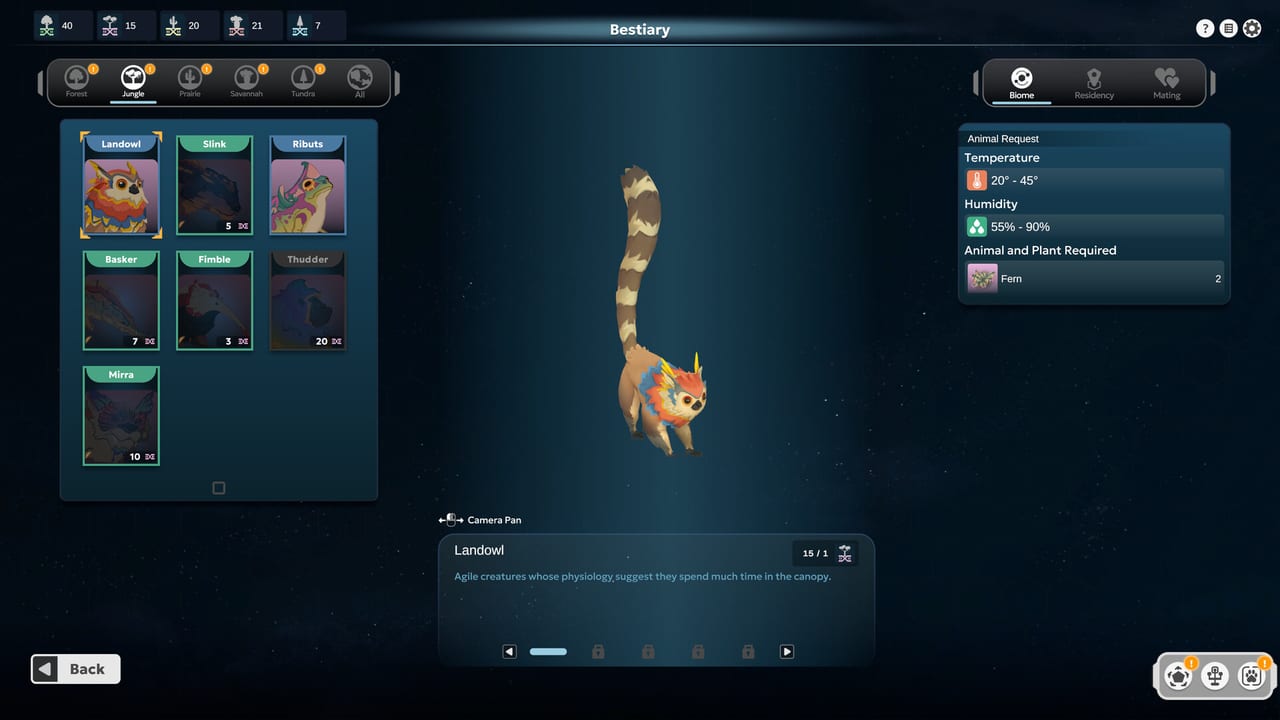
DNA is how a barren BioEden planet gets its first resident. You do not craft animals in a factory. You gather DNA fragments, open the Bestiary, select a species you can afford, press Analyze, and then hatch that species from an incubator—or tend it through cocoons once the dome is ready. Official copy says the same loop in marketing language: gather DNA samples, place your cocoons, and match temperature, humidity, and vegetation. The tutorial is that loop with Charles talking over your shoulder.
This page is the spend. Care after the hatch lives in animal care. First-hatch ranks live in the animal rankings. Charles as a robot, not as a DNA drop, lives on Charles. The Species hub ties the three together.
DNA fragments and the Analyze button
Fragments are a currency you find by playing the outside loop: exploration, salvage, research, and the chores the Cosmic Collective names. They are not Steam points and not a premium shop. Highlighted portraits in the Bestiary are the species you can currently afford. Grey portraits are a wish list. Tabs along the top split the catalog by biome: Forest, Jungle, Prairie, Savannah, Tundra. Named map sites such as Red Forest are places on the globe, not extra tabs of creatures.
When you have selected a species, press Analyze to unlock it. That is the verb the tutorial uses. Analyze spends the fragments and adds the animal to the set you are allowed to hatch. It does not spawn the animal in the dome. If you Analyze and then wander off without an incubator, you own a recipe, not a bird.
The Jungle tab is where most tutorial Keepers stop looking. It lists creatures such as Landowl, Slink, Ributs, Basker, Fimble, Thudder, and Mirra, each with a DNA price on the panel. This wiki will not invent a fake price table. It will say what the panels actually teach: Landowl is the affordable first hatch with a wide climate, and Thudder is the expensive name you should not buy with your first pile of fragments. Spend on one Analyze. Hatch that one. Then gather more.
There are no fail states if you Analyze the “wrong” species. You can still recycle buildings and take as long as you need. You cannot un-spend fragments by recycling the animal portrait. That is why the rank list exists.
The biome knowledge tree
Beside the catalog is a research tree split by the same biome tabs. The tutorial describes it as the place you unlock devices and DNA fragments through research. Developing Forest, for example, unlocks plants and fragments tied to Forest. Jungle research is what points you at Landowl. Level two on that tree asks for research points—ten in the tutorial beat we can quote—so you cannot skip the outside loop and max a biome from the menu.
The tree is why plants matter before bowls. Landowl wants ferns. If the Jungle branch has not given you ferns, the incubator is a box in an empty room. Unlock the plant, place it in the same dome as the incubator, then tune climate. Forest points do not substitute. A Prairie watering hole does not replace a Jungle fern because the screenshot looked green.
Devices from the tree include the climate tools the dome actually uses: humidifiers, air conditioners, and the other machines that hold a window such as 20–45° and 55–90% humidity. Those machines are still buildings with power and water needs. Rank their footprint on the building list. Research them here. Place as few as the panel requires.
Guild perks can nudge this tree later. The Umbra level 6 panel, for example, shows Speed Reading at +15% research, which is a research-speed perk, not a free Analyze. Euler, Orin, Darwin, Xylar, and Umbra remain full-game picks; the tutorial is a training path. Do not wait for a guild to press Analyze for you. Pick the path on the guild rankings when the 3 September 2026 campaign starts, and keep spending fragments the same way.
Incubators, cocoons, and Landowl’s numbers
Charles calls the incubator the initial stage of a new species. Place it on the dome floor and follow the open steps. That is the hatch. Cocoons are the other placement official copy names: you put them down and then keep tending conditions so the creature feels at home. Both objects need a room that already matches the Bestiary card.
Landowl is the card this wiki will quote with numbers, because the panel shows them instead of hiding behind a “likes warm places” vibe. Temperature about 20–45°. Humidity about 55–90%. Vegetation: ferns. That window is wide on purpose. It is the first-hatch S-tier for a reason. You can miss the perfect center. You cannot ignore the ferns, mix in a carnivore, or skip water. Diet still applies: if you later hatch a predator into the same slice of dome, it can eat the herbivore you spent DNA to unlock. Split rooms. Match bowls. Details stay in animal care.
Once conditions hold, animals use the space and can reproduce without extra clicks. That is the reward for a correct Analyze. If they look stressed, check humidity and plants before you buy Thudder as if a rarer portrait were medicine.
The screenshot on this page is the Bestiary UI, not a finished encyclopedia. Focus still describes dozens of species for the full 15–20 hour campaign. Until that roster is in players’ hands, refuse fake spreadsheets. If a number is not on the panel, it is not a fact.
A calm DNA session is one tab, one Analyze, one incubator, one plant. Then you go back outside, because fragments and research points come from the hexes, not from staring at portraits. Recycle extra climate machines if the globe complains. Keep the incubator if the bird is alive. That spend-and-stop habit is the Bestiary’s whole skill, and it is the habit you want installed before the 3 September 2026 launch asks you to fill more tabs than Jungle.
Frequently Asked Questions
Quick answers to the most common questions.
How do I unlock animals in BioEden?
Gather DNA fragments, open the Bestiary, select a highlighted species, and press Analyze. Then hatch from an incubator. Care after that is animal care.
What are Landowl's climate numbers?
About 20–45° temperature, 55–90% humidity, and ferns. That wide window is why Landowl leads the animal rankings.
What does the biome knowledge tree unlock?
Devices, plants, and more DNA fragments, gated by biome tabs. Jungle research is what points you at Landowl. Charles introduces the menu on the Charles page.
Should I Analyze Thudder first?
No. Thudder is the expensive Jungle name. Analyze Landowl, hatch it, then spend again. First-hatch order is on the animal rankings.
Do incubators and cocoons both use DNA?
Analyze spends DNA. Incubators and cocoons are placements that hatch or tend the unlocked species. Footprint still follows the building rankings.